

Cart 0


01 / Planning priority
Define the collection and treatment scope
Identify filtration, first-flush or other treatment requirements through the system designer. Agree which components are included in the tank order.

RAINWATER / NON-POTABLE REUSE
GRP storage for rainwater and agreed non-potable duties. Decca reviews the water source, intended reuse and tank arrangement with your team.
Selection help · Drawing review · Agreed installation support
Tell Decca the source of the water and the proposed outlets. Storage for WC flushing, irrigation or another reuse duty needs a clear system brief; a tank alone does not make collected water suitable for every use.
| Water source | Rainwater, another supply or a combination. |
|---|---|
| Intended reuse | Identify every permitted outlet and the required water quality. |
| Yield and demand | Collection data, usable reserve and seasonal variation. |
| Mains backup | Confirm whether top-up is present and its backflow-protection design. |
| Maintenance | Filtration, sediment removal, overflow route and safe access. |
01 / Planning priority
Identify filtration, first-flush or other treatment requirements through the system designer. Agree which components are included in the tank order.
02 / Planning priority
Rainwater must not be directly connected to the mains drinking-water supply. Where they combine, the water supplier must be notified and the backflow arrangement agreed; Type AA or AB air gaps are typical solutions.
03 / Planning priority
The GRP cold water ranges discussed here are for above-ground storage. Buried installation, vehicle loads or other external pressures require a specifically designed product and installation.
A rainwater-storage assessment needs collection yield and intended demand, including dry periods. The Decca calculator checks tank volume and selected operating assumptions; it does not calculate rainfall yield, treatment performance or a mains-backup design.
WORKED-THROUGH PLANNING QUESTION
A mains-inlet air gap is not a feature of a system with no mains inlet. The overall design still needs appropriate air movement, screening, overflow, drainage, level control and maintenance access. If mains top-up is added later, review the backflow-protection arrangement before connecting it.
These links cover above-ground tank construction. Confirm the selected product for the source, water quality and location.
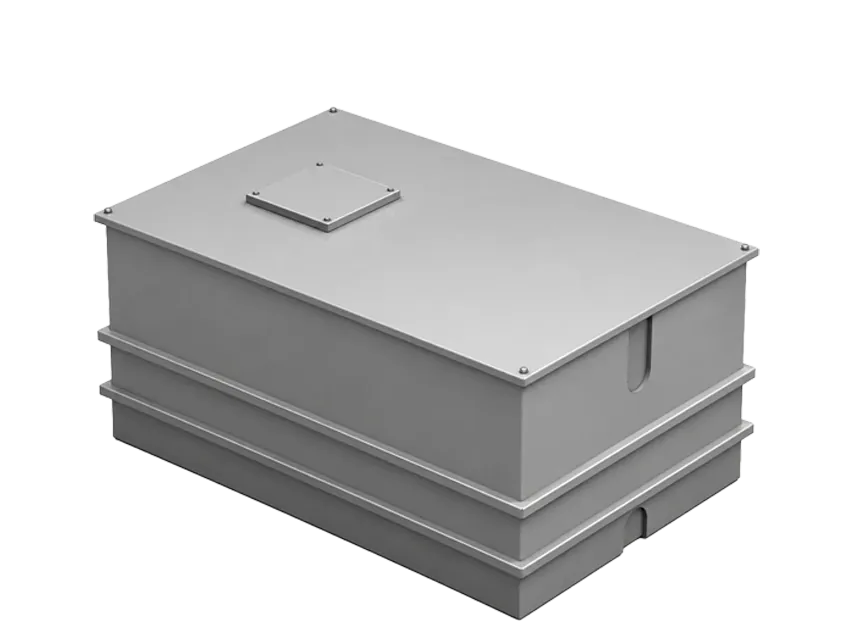
A complete moulded body where the full delivery route works.
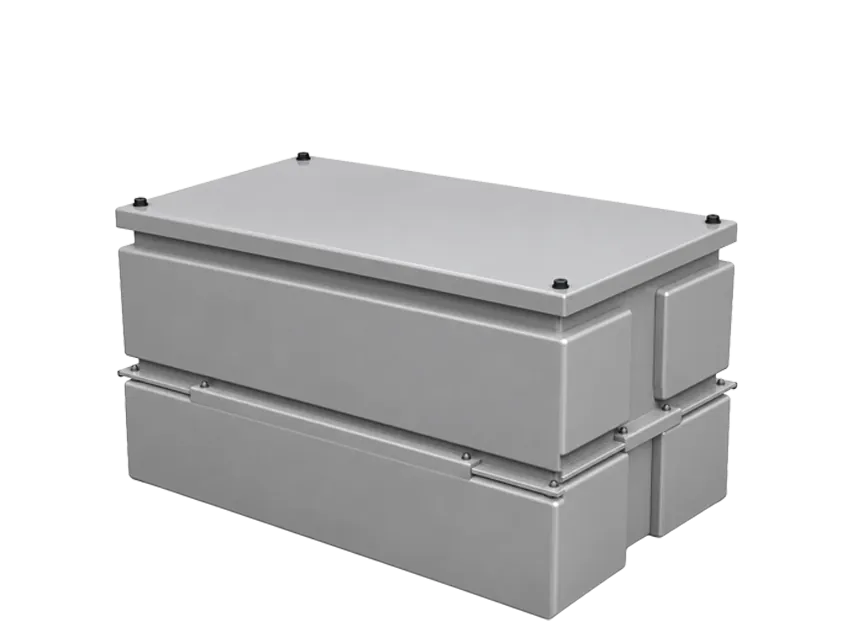
Separate body sections, with room to assemble and seal the joint.
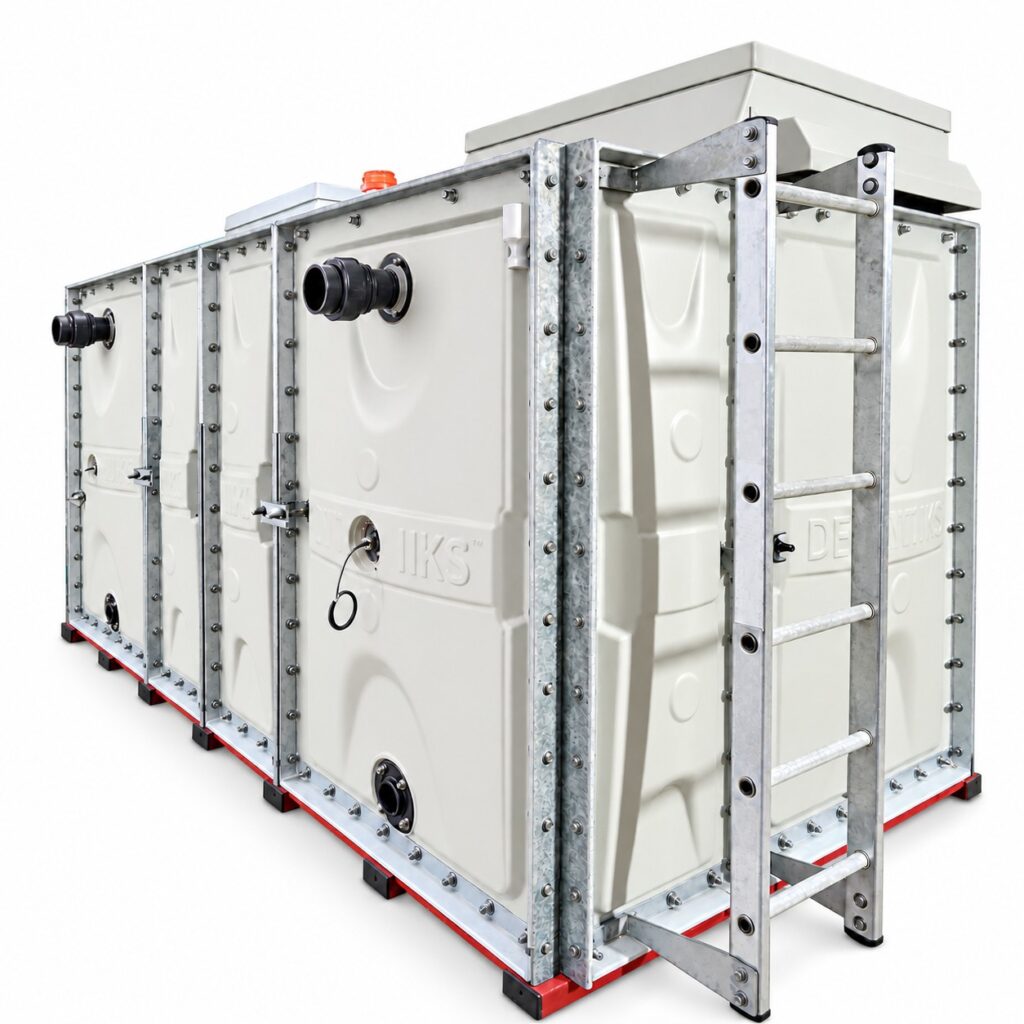
Panels assembled in position; compare the base and fixing access.
TIF body height is limited to 3 m; other tank bodies to 4 m. Chambers, supports and maintenance headroom are additional. Final dimensions and access are agreed with Decca.
Decca helps select the tank and reviews the water source, intended reuse, top-up arrangement and tank layout with your team. We manufacture and supply the agreed tank and can quote for installation. Any testing, cleaning, disinfection and handover in our scope is agreed before work starts.
Share the information you already have. Mark unknown items for review rather than guessing them.
This guide concerns non-potable reuse. Potable use needs a separate treatment, water-quality and regulatory assessment; tank storage alone does not establish suitability.
A mains-inlet air gap is relevant where a mains supply is connected. Systems without mains top-up still need a complete reviewed storage and reuse design.
Do not bury a standard above-ground tank. Use a product and support arrangement specifically designed for burial and the imposed ground and traffic loads.
Use the current project specification and confirm the applicable document editions with the responsible designer. These links provide background guidance; they are not product-approval certificates.
Application planning guidance. Product suitability, approval evidence and the final Decca drawing must be confirmed for the order. Water demand and complete system design remain with the responsible designer.